Graduating from The Last House Sober Living in Los Angeles is not an ordinary achievement. It represents one of the highest levels of commitment in recovery: a full year of continuous sobriety, completion of all 12 steps of Alcoholics Anonymous, and becoming emotionally and financially independent from parents. Few programs in the country require this level of accountability, structure, and personal responsibility.
Graduation is more than a ceremony. It’s a moment for the community to pause and recognize real transformation. Staff, residents, and friends come together to share stories from the past year — the moments of growth, the setbacks, the breakthroughs, and the quiet changes no one noticed until they stacked up into something life-changing. For the graduate, this is often the first time they truly see how far they’ve come. For current residents, it’s proof of what is possible when you stay the course.
Below are real, unfiltered words written by residents preparing for graduation. These reflections capture the heart of The Last House: accountability, humility, brotherhood, and genuine change.
Success Story #1
“Since entering the Last House my attitude, behaviors, and outlooks have completely changed. I used to sit around waiting on things to happen to me, now I go and make them happen for me. I believe in God again and that as long as I take the next right action and do God’s will everything will work out. I am able to walk through difficult situations with grace, and carry myself like a man not a child.
I look at life through a different lens now — before all I seen were hopelessness and a path to nowhere. Now when I look around I see progress through pain and uncomfortability allowing me to grow and leading me to better opportunities. I believe I am no longer a statistic but an instrument created to help guide others to freedom from obsession.
Today my attitude is completely different; I look forward to the good days and the bad days.
I push through the hard times with grace and humility. When I entered the Last House I was sure that my life was over — little did I know that it had only just begun. Before going to the Last House my goals were to get disability and live at my mother’s house. After the Last House my goals are to be the best dad I can be, the best son, and brother I can be.
Be an asset not a liability, make money, become financially stable, get my diploma, find a career, get and stay fit, add value and happiness to the lives of people around me.”
– Jake A
Success Story #2
“Before I came into the Last House, I was impulsive. I thought that my willful defiance was the most important thing about me. I thought society was sick. I thought society was wrong. I thought somewhere, somehow humanity went wrong and I was the only person who had the right perspective. And the way to express it was to be defiant as much as I could be.
I also thought that life was supposed to be basically super happy and blissful like all of the time. My behaviors reflected that… I was basically numb, I failed college and acted like I didn’t care. I isolated, avoided accountability, and surrounded myself with people who would cosign my behaviors instead of my community.
Since coming into the L.H., I learned to clean up after myself. I learned I had a serious problem not criticizing people. Essentially, I learned that:
Life is not really about how willfully defiant I can be.
Most people do not care about my opinion about them.
There’s something you get out of a place if you show up and suit up every week for half a year.
I pray every day AKA connect with God.
Getting along with people takes work. I have guys I am close with and I tell them what I am dealing with.
I do many community activities like coming to the house every week and going to my local temple. I clean up after myself. I hold my tongue a lot and I still try my best to work on myself.”
-Eugene L
What Graduation at The Last House Represents
The Last House is known for structure, accountability, and long-term growth. These stories highlight what separates The Last House from traditional sober living homes:
A full year of sobriety is required for graduation
All 12 steps of Alcoholics Anonymous must be completed
Residents must prove financial and emotional independence from family
Each individual must demonstrate responsible living, community involvement, and leadership in the house
Graduates become examples for the next generation entering the program
This combination creates real change — not temporary sobriety, but long-term maturity, stability, and purpose.
Why These Stories Matter
Recovery is not about perfection. It’s about the willingness to change, to listen, to take responsibility, to show up when it’s uncomfortable, and to keep going when you want to give up. These success stories show exactly that.
For parents, they offer hope.
For current residents, they offer direction.
For the graduates, they are proof of who they’ve become.
The Last House continues to be one of the strongest structured sober living programs in Los Angeles because of stories like these — real young men doing the hard work to rebuild their lives.
At The Last House, community is everything. Our structure, accountability, and brotherhood go far beyond meetings and chores — they extend into how we celebrate life together. Halloween is one of those times where that spirit really shines.
Sober Fun That Still Feels Like Fun
At The Last House, recovery doesn’t just mean staying sober — it means learning how to live again. For many men who walk through our doors, the idea of celebrating holidays without alcohol or drugs can feel strange, even impossible. But once they experience their first Halloween here, that changes fast.
Each October, something shifts in the houses. Decorations go up, pumpkins line the steps, and the energy feels different — lighter, more playful. The guys start tossing around costume ideas, planning events, and figuring out how to make each celebration bigger than the last. It’s not just about the holiday itself; it’s about learning to have fun, connect, and build memories in sobriety.
A few of the residents at The Last House Sober Living In Los Angeles carve pumpkins together to get into the halloween spirit.
Sober Fun That Still Feels Like Fun
Halloween at The Last House has become a tradition that residents and alumni look forward to every year. The men take pride in creating a full experience — from carving pumpkins and decorating the houses to handing out candy to the entire neighborhood.
You’ll see everything from classic horror movie characters to laugh-out-loud group costumes that only make sense to the guys living together day in and day out. It’s creative, competitive, and genuinely hilarious.
And here’s the best part: nobody needs substances to enjoy it. The laughter is real, the energy is real, and the sense of connection is something you can feel the moment you walk in.
These kinds of events are more than just good times — they’re proof. Proof that you can build a life that’s not only sober, but full. For someone early in recovery, that realization is powerful. It’s one thing to hear that “you can have fun sober.” It’s another thing entirely to experience it — surrounded by brothers who’ve all walked the same path.
Relearning How to Celebrate
Most men come to The Last House after years of associating holidays with chaos. For some, Halloween was an excuse to party. For others, holidays like Thanksgiving or Christmas brought up guilt, shame, and broken family memories.
That’s why our community makes such a point of rebuilding what those days mean. We don’t skip holidays; we reclaim them.
Residents work together to plan activities, cook meals, and create new traditions that focus on inclusion, laughter, and presence. A guy might help lead pumpkin carving for the first time. Another might take pride in hosting a movie night or leading a gratitude share. These small actions build confidence and show them that being part of something bigger — giving instead of taking — feels better than any high ever did.
Celebrating sober holidays teaches more than joy; it teaches emotional regulation, teamwork, and social connection — all skills that recovery depends on.
Community Is the Core
What makes The Last House special is how our guys show up for one another. Holidays are just another chance to live out that principle. When Halloween rolls around, nobody isolates. Everyone participates.
Whether they’re decorating, cooking, or just showing up to support their housemates, every man contributes in some way. Those small acts of participation build community, and community is the lifeblood of long-term recovery.
That brotherhood carries into everything we do — group meetings, house dinners, weekend events, and yes, every holiday. The men begin to understand that connection is the opposite of addiction. When you feel like you belong, you don’t need to escape.
Halloween is all about community and our residents get out in the community and have some fun. Here they are at a sober halloween party.
A House That Feels Like Family
Ask anyone who’s spent time in The Last House what makes it different, and they’ll tell you: it feels like home.
That feeling really comes alive during the holiday season. After Halloween, the guys start planning Thanksgiving dinner — a full spread cooked by residents and staff together. There’s gratitude shared around the table, stories, laughter, and sometimes tears. For men who once spent holidays alone or in chaos, that experience hits deep.
Then comes Christmas, where everyone participates in Secret Santa, decorates the house, and focuses on giving rather than receiving. There’s no pressure to be perfect — just to show up and be part of something meaningful.
Even smaller holidays get attention. Fourth of July brings beach volleyball and barbecues. New Year’s Eve becomes a time to reflect, not relapse — celebrating the growth that’s happened and the year ahead.
Through each holiday, one message stays the same: we don’t isolate, we don’t escape, and we don’t avoid life. We celebrate it — together.
Why It Matters
Addiction thrives in isolation, secrecy, and shame. Recovery grows in community, structure, and shared experience. That’s why holiday celebrations matter so much at The Last House. They’re more than parties — they’re training grounds for real life.
By learning how to navigate holidays sober, residents are preparing for the world outside. They practice showing up, participating, managing emotions, and connecting with others — all while staying true to their recovery.
Many of our alumni look back on these moments as turning points. They remember the laughter, the brotherhood, and the realization that life doesn’t have to be dull or restricted without substances. Sobriety gave them freedom, and holidays like Halloween gave them proof.
Carrying the Spirit Beyond The House
What starts at The Last House doesn’t end when residents graduate. Those same men go on to host sober gatherings of their own — Halloween parties, Friendsgivings, beach days, and volunteer events — continuing the same traditions they learned here.
They become the kind of men who lead by example, showing others that sobriety isn’t a limitation, it’s liberation. They show that connection doesn’t stop at the walls of a sober living — it expands into the world when you’re willing to show up for others.
That’s what we mean when we say The Last House is more than a program. It’s a community, a lifestyle, and for many, the first real taste of belonging they’ve had in years.
Residents at The Last House Sober Living celebrate halloween by participating in a murder mystery.
At The Last House Sober Living, we know that recovery doesn’t happen in isolation. Families play a huge role in the healing process, and the way they approach their loved one’s recovery can either support long-term change or unintentionally create barriers. That’s why we put just as much emphasis on family support as we do on helping our residents rebuild their lives.
We believe that when families develop the right mindset toward recovery, half the battle is already won. Shifting old patterns, letting go of codependency, and learning how to trust the process is not easy—but it is necessary. Our family coaching program is designed to walk families through this process, giving them the tools, perspective, and support they need to grow alongside their loved one.
Why Family Coaching Matters
Recovery is rarely just about the individual. Addiction impacts everyone, and families often develop patterns of fear, frustration, enabling, or over-involvement as they try to navigate the chaos. By the time someone enters sober living, their loved ones are often exhausted and unsure of how to help.
That’s where family coaching comes in. We provide families with a safe space to express their concerns, ask questions, and learn healthier ways to approach recovery. The truth is, recovery doesn’t just mean sobriety—it means creating a new way of living. Families who engage in coaching gain perspective, break free from codependent habits, and learn to offer support without losing themselves in the process.
Weekly One-on-One Family Coaching
Every family at The Last House receives weekly one-on-one coaching sessions with our program director. These meetings are private, focused, and tailored to each family’s needs. During coaching sessions, families have the opportunity to share concerns about their loved one’s progress and ask questions about recovery milestones and challenges. They receive direct feedback from our experienced staff on the best ways to approach difficult situations. Families also begin learning strategies that help them set boundaries, reduce enabling behaviors, and encourage their loved one to take responsibility for their own recovery. This direct, consistent communication helps families feel supported while also giving them clarity about what’s happening in their loved one’s recovery journey.
Family Support Group
In addition to private coaching, we also provide group support for families. These groups create a sense of community and connection, reminding families that they are not alone in this journey. Our family groups take place on the first three Mondays of every month, with each week offering a different type of support.
On the first and third Monday, we hold open share meetings. These meetings are modeled after Al-Anon, beginning with a topic to guide discussion, and then allowing families to share openly about their experiences. Families often find comfort in realizing that others have walked the same path. Hearing stories of hope and resilience from families who are further along in the process provides encouragement and perspective. Just as importantly, families begin to see that their challenges are not unique, and that recovery is possible for everyone.
On the second Monday of each month, we hold a skills-based group led by Dr. Lynn Salvatore. These sessions focus on Dialectical Behavior Therapy, or DBT, a set of practical tools designed to manage emotions and improve communication. Families learn skills like mindfulness, distress tolerance, and ways to communicate effectively, which help them manage their own emotions while also giving them a clearer understanding of what their loved one is learning in treatment. By seeing these same skills in action, families can better connect with and support the changes happening at home.
Building Healthier Family Mindsets
At the heart of family coaching at The Last House is the idea of shifting mindset. Families who are overly focused on control or fear often struggle to allow the recovery process to unfold naturally. Our coaching helps families move away from unhealthy dynamics and toward healthier, more sustainable support.
A major focus of our work is helping families reduce codependency. Many loved ones lose themselves in the process of trying to manage or control their child, sibling, or partner’s recovery. Coaching teaches them how to care for themselves while still being present for their loved one. Families also learn how to encourage independence, understanding that their loved one’s recovery is about personal growth and accountability. Allowing residents space to practice responsibility is often one of the most loving actions a family can take.
We also help families learn how to trust the process. Recovery takes time, and progress is not always linear. Families are guided to let go of unrealistic expectations and to focus on the long-term path rather than short-term frustrations. As these skills are practiced, families strengthen their ability to communicate in healthy ways and rebuild trust within their relationships. This transformation doesn’t just benefit the resident in recovery—it creates lasting change for the entire family.
Why Families Choose The Last House
Many treatment programs focus exclusively on the individual, but at The Last House, we know that lasting recovery requires family involvement. Our combination of weekly one-on-one coaching, open share groups, and DBT skill-building sets us apart. Families who participate in our program walk away with a much clearer understanding of addiction and recovery, as well as practical tools for managing their own emotions and responses.
They also develop a strong sense of community by connecting with other families who are experiencing similar challenges. Over time, they gain the confidence to trust their loved one’s recovery process without feeling the need to micromanage or enable. Most importantly, families begin to heal right alongside their loved one, creating an environment that supports growth and long-term success.
The Lasting Impact of Family Coaching
When families invest in their own growth, recovery becomes a shared journey instead of a one-sided struggle. Parents, siblings, and partners often report that they feel lighter, more hopeful, and better equipped to handle challenges after participating in our program. Over time, these families become some of our strongest advocates, offering encouragement to new families just starting out. The process of sharing experiences and learning together creates a ripple effect that strengthens the recovery community as a whole.
At The Last House Sober Living, we believe that family involvement is not optional—it’s essential. By helping families develop the right mindset, we set the stage for lasting recovery. Weekly coaching, family groups, and DBT skills training create a powerful foundation for change, not only for our residents but also for the people who love them most. Recovery is not just about abstaining from substances—it’s about building a healthier way of life. With the right support, families can stop living in crisis and start living in connection, trust, and hope. That’s the difference family coaching makes, and that’s the difference The Last House provides.
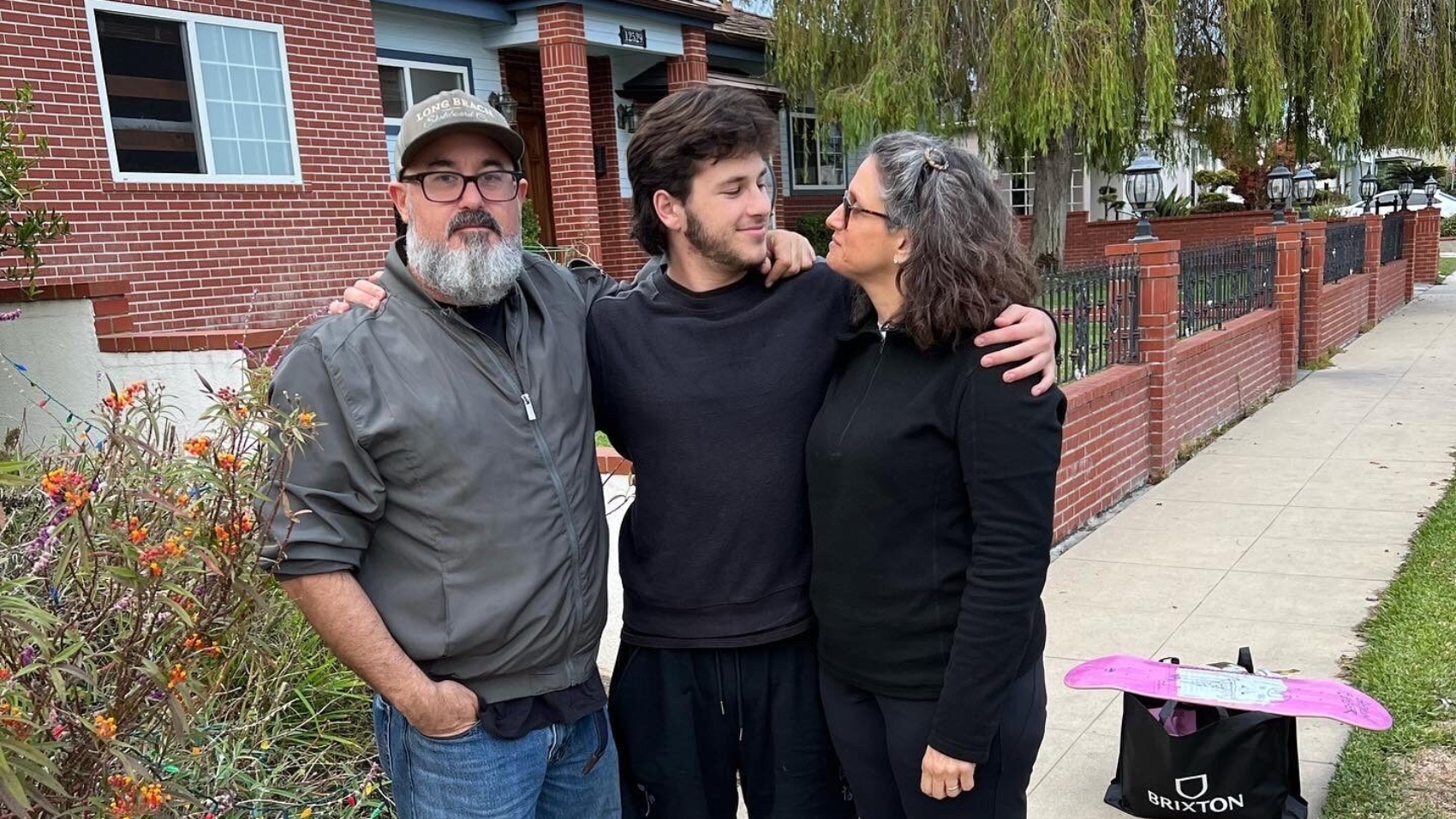
This is a Last House Sober Living graduate reunited with his family after doing the hard work together.
Stress and anxiety have become the uninvited guests in our daily lives, leaving many of us feeling overwhelmed and anxious.
But what if you could master simple, practical techniques to turn your life around? Keep reading to learn coping strategies for dealing with stress and anxiety to regain control of your mental well-being!
What Are Stress and Anxiety?
First and foremost, it is essential to understand what stress and anxiety are.
However, it should be noted that while some stress may be pretty normal and even beneficial in some cases, excessive stress or overwhelming anxiety can have serious health consequences both mentally and physically.
However, the good news is that there are many simple techniques you can use to manage stress and anxiety.
Mindfulness: Your Secret Weapon Against Stress and Anxiety
Mindfulness, or being completely present in the current moment, is a powerful remedy for stress and anxiety. It needs nothing else apart from your attention and intention.
Imagine yourself in the middle of a tense work situation. Then, take five minutes to practice mindfulness by concentrating on breathing in and out.
By doing so, it interrupts the negative thought cycle, easing anxiety and stress. By practicing it regularly, mindfulness can be an excellent resource in your mental health arsenal.
Physical Activity: The Natural Mood Booster
Physical activity is another effective way to fight against stress and anxiety.
Even just a walk can help relax your mind and reduce stress levels since exercise releases endorphins that are natural mood-enhancers.
Try integrating physical activity into your day, such as jogging every morning or having an evening yoga session.
This does not mean you should become a fitness freak overnight; instead, it means building a consistent and manageable routine supporting your mental well-being.
Deep Breathing: A Portable Stress-Relief Tool
Deep breathing exercises are another easy-to-use but effective means of coping with stress and anxiety.
Such exercises communicate to the brain to calm down, thereby relaxing, leading to lowered heart rates, reduced blood pressures, and thus calmness in general.
Here’s one simple deep breathing exercise: sit comfortably, close your eyes, breathe slowly and deeply via your nose, and fill your belly with air.
Once more, hold it briefly before exhaling slowly through your mouth. Repeat several times while feeling the tensions leaving you.
Coping Strategies in Addiction Recovery
These coping strategies are not just helpful in managing everyday stress and anxiety; they also play a crucial role in substance abuse recovery.
The path to recovery from addiction is often filled with stress and anxiety, and having a range of positive coping strategies in their armory can help individuals navigate this challenging journey.
Many professional treatments for addiction, like cognitive behavioral therapy and exposure therapy, involve aspects of mindfulness, physical activity, and deep breathing exercises.
They approach the dual-diagnosis disorders of addiction and anxiety holistically so that individuals leave with the tools necessary to control their lives again.
The Last House: Harnessing Stress and Anxiety Coping Strategies for a Brighter Tomorrow
Coping strategies for dealing with stress and anxiety are more than theoretical concepts; they are practical, actionable tools you can integrate into your daily life.
Support from professionals at The Last House, as well as integrating some of these coping mechanisms into your daily regime, will enable you to move towards a better mental health state.
Remember, it is not about getting rid of stress and anxiety entirely but instead learning how to handle them effectively. So why should you wait? Start now! Begin the journey today; contact our sober living in Los Angeles for coping strategies for dealing with stress and anxiety.
Drug addiction and mental health often go hand in hand. While we see the devastating impacts of both conditions on the sufferers and their loved ones, they don’t appear out of nowhere. Addiction and mental illness can be seen as weeds that have deep roots. When you dig deep, childhood trauma is often the root cause. When trauma is not addressed and allowed to fester, its impacts often are felt for a lifetime.
This article will uncover the connection between childhood trauma and mental health and how trauma-informed care helps people heal from their wounds and transform their lives. If you are recovering from dual diagnosis, the Last House sober living network is here to help. We offer evidence-based programs that give you the tools to combat childhood trauma and other issues that impact your well-being.
Call the Last House today and begin your recovery journey with a clean slate.
Understanding Childhood Trauma
In our discussion of childhood trauma and mental health, we need to first define what trauma is and how it affects people. Trauma is simply a deeply emotional response to an event that has lasting impacts on a person’s psychological development and growth. As children, we are exposed to any number of events that can be deeply traumatic. Common examples of these events include the following:
Sudden death of a loved one or pet
Being the victim of physical, sexual, or psychological abuse
Living with and surviving major illnesses such as cancer
Living in prolonged poverty and financial distress
Being the victim of bullying
Being exposed to household violence and neglect
In many cases, children who experience adverse childhood experiences (ACEs) can process and move on with the proper support. However, some children may have support systems or help in place to help them deal with the intense feelings associated with these events. As a result, childhood trauma can have devastating consequences that last well into adulthood. Some of these consequences include:
Increased risk of diseases such as cancer and diabetes
Increased risk of suicidal ideation and suicide
Accumulated stress that compromises brain development and cognitive functioning
The onset of mental illness such as depression and anxiety
Ultimately, the stresses associated with traumatic events as children hinder people from forming stable and healthy relationships, and many turn to substances to cope. When people who have unresolved trauma have families of their own, their children are vulnerable to trauma creating a vicious cycle that is difficult to untangle.
Dealing with Childhood Trauma and Addiction with Trauma-Informed Care
Those dealing with the two-headed monster of childhood trauma and addiction must enter a specialized program that features the services needed to fully address both issues. Fortunately, an increasing number of rehabs are adopting a game-changing program called trauma-informed care. This breakthrough program focuses on addressing the specific root issues of a client’s trauma. These programs help clients better manage their symptoms to minimize the risk of being re-traumatized down the road.
In addition to 12-step-based approaches, detox services, and life and coping skills training, trauma-informed care programs focus on effective therapies such as CBT, exposure therapy, and medication-assisted therapy (MAT). The greatest benefit of this approach to treatment is it helps clients realize they aren’t weak and beyond help. Clients can address the root causes of their trauma in an environment that is supportive, safe, and non-judgmental.
The Last House Will Give You The Tools You Need to Overcome Childhood Trauma and Addiction
The pain of childhood trauma can last a lifetime and can ruin families and friendships. Dealing with co-occurring disorders requires comprehensive and integrated care. If you are recovering from trauma and substance abuse, having extra tools and support goes a long way in healing your mind, body, and spirit. As Southern California’s premier sober living network, the Last House offers evidence-based treatment services and support customized to meet your specific needs.Our men’s sober living homes feature state-of-the-art amenities and clinical support to help motivate and empower you to live your best life. Most importantly, the Last House offers all clients strong peer and staff support to show all who seek help they aren’t alone. Call us today and take back control of your life.
For those recovering from mental illness, having support is a game-changer. Mental health support groups provide confidence and motivation in helping people manage and even overcome their mental health issues. People in recovery groups for mental health can share their stories and listen to those who share similar struggles. Ultimately, support groups for mental health give people the confidence they need as they re-enter their daily lives and routines.
This article will highlight the mental health support groups available and the importance of these groups in helping people maintain good mental health. If you are recovering from mental illness, substance abuse, or both conditions, The Last House can help you! Our sober living network provides clients with tremendous peer support, clinical support, state-of-the-art amenities, and evidence-based programs that will transform your life.
Mental health support groups bring together people from all walks of life who are going through or have gone through similar experiences with mental illness. Within these support groups, people can share their personal feelings about experiencing mental illness in a safe and non-judgmental environment. People can also share coping strategies for dealing with mental illness and the therapies and treatment methods that have helped them better manage their mental health.
In many ways, support groups for mental health act as a bridge between treatment and family support. A support group encourages others when they are vulnerable and celebrates others’ milestones. These support groups can also provide compassion and understanding for those whose families may not understand their mental illness. Also, people in a support group hold people accountable if they are falling short in working on their recovery program.
Finding a support group often starts with a talk with your primary health provider or local mental health professional. These individuals will point you toward support groups for mental health in your area as well as helpful resources within the community that will help you better manage your overall mental health.
What Mental Health Support Groups Are Available to Those Needing Help?
For those who are seeking additional help in managing their mental illness and overall mental health, there are many options for support groups. A great place to start your search is the National Alliance on Mental Illness (NAMI). NAMI support groups include NAMI Connection which allows people with mental health conditions to come together to share their experiences, support each other, and heal from mental illness. NAMI also offers family support groups for family members, friends, and significant others to help them better understand a loved one’s mental illness. Depending on location, these groups are held weekly, biweekly, or monthly.
There are also mental health support groups that are 12-step based. For example, Emotions Anonymous is geared toward people experiencing anxiety, depression, anger, and low self-esteem. Another mental health-based support group is Neurotics Anonymous which provides support and information for those recovering from mental illness. For conditions that are related to some form of mental illness, 12-step-based groups such as Overeaters Anonymous, Love Addicts Anonymous, and Workaholics Anonymous are available.
Additionally, there are support groups for those experiencing substance abuse along with mental illness. Examples include Dual Recovery Anonymous, Double Trouble in Recovery, and Everyone’s Recovery Groups (ERG). There are also support groups that focus on a particular mental illness. Examples of these types of mental health support groups include the Depression and Bipolar Support Alliance, The Anxiety and Depression Association of America, and the Depressive-Manic Depressive Association of America. These groups offer in-person meetings, and some offer virtual meetings as well.
Transform Your Life With Help From The Last House
Finding and accepting additional help and support increases your chances of long-term recovery. The Last House is Southern California’s premier sober living network. We offer men’s and women’s sober living programs that provide evidence-based programs and support that give you the confidence and motivation needed to stay on the path to recovery. Our residences feature state-of-the-art amenities and foster a strong sense of community. Today is the day you take back control of your life; call The Last House Sober Living Network today and experience lasting happiness and freedom.
A huge part of long-term sobriety is having optimal mental health. If you look good, feel good, and have the utmost confidence in yourself, you minimize the risk of relapse in recovery. While simple on paper, your focus may not be on mindfulness and mental health. The stresses of everyday life and the triggers present in your environment can leave you torn and frayed. If not addressed, it is only a matter of time before you turn back to substances to cope with your life.
In this article, you will learn how mindfulness improves mental health. You will learn the importance of mindfulness and ways you can practice mindfulness in your everyday life. If you are looking to preserve your hard-earned sobriety, call The Last House toll-free today. We offer top-tier aftercare and sober living programs that feature clinical and in-house support that is second to none. Call The Last House today and strengthen your recovery.
What is Mindfulness?
When you hear the word mindfulness, you may think of it as an esoteric New Age concept. In reality, mindfulness is a practice where you simply have full awareness of your thoughts in the present moment. When thoughts, feelings, and emotions enter your mind, you simply accept them for what they are and pass no judgment. When you are practicing mindfulness, there are right or wrong feelings. You are focusing on the present while avoiding reliving the past and worrying about the future.
How Does Mindfulness Improve Mental Health?
Now that you have a basic definition of mindfulness, how does mindfulness improve mental health? Early in your recovery, you experience wide and unpredictable swings in emotions. You may feel like you are hanging on my thread and feel like the wheels may come off at any moment. While these feelings are normal, not addressing them in a healthy and timely manner makes you vulnerable to relapse.
Utilizing mindfulness practices helps ground you in the present and makes you fully aware of what you are feeling in the present moment. When thoughts enter your mind, you simply acknowledge they are present and accept them for what they are. Once you acknowledge and accept your thoughts you let them go and return your focus to the present moment. When you focus on the here and now, you can see things clearly and can take positive steps forward.
Ways to Utilize Mindfulness To Improve Your Mental Health
Despite what you may think, incorporating mindfulness practices into your daily life is simple. The most common form of mindfulness practice is mindful meditation (also known as focused breathing). This form of meditation is very effective and only requires 10-15 minutes of your day. To perform mindful meditation, find a spot that is quiet and free from distraction. Focus on your breathing and the sensations you experience. When thoughts arise, acknowledge them, accept them, and return to your breath.
You can also incorporate mindfulness in recovery in other parts of your day-to-day life. For example, you can practice eating meditation where are take time to slow down and focus on each bite of food. Note the taste and texture as you slowly chew. You can also perform a walking meditation where you find a secluded spot where you can walk comfortably and note the sensations you feel with every step. Additionally, you can perform a listening meditation where you listen to sounds in your environment and imagine yourself getting inside those sounds. As always, avoid placing judgment on these sounds; accept them for what they are at that moment and move on.
Bolster Your Confidence In Recovery With Help From The Last House
You have worked hard to overcome your addiction and you must protect your investment at all costs. An excellent way to preserve your sobriety is to attend aftercare and sober living programs such as the one offered at The Last House. The Last House is Southern California’s premier sober living housing network. Our homes feature state-of-the-art amenities, evidence-based programming, as well as top-tier clinical support. We will help you develop and sharpen the tools you need to achieve lasting recovery. Call The Last House today and become confident in your sobriety.
The key to staying sober for the long term is learning to take care of your mental health. A large part of accomplishing that goal is to prioritize self-care daily. The ability to take care of your physical and mental health needs goes a long way in keeping you vibrant, sharp, and ready to face the challenges of daily life positively. While finding ways to prioritize yourself seems self-explanatory, it is easy to lose sight of proper self-care in the hustle and bustle of day-to-day living.
This article will discuss what self-care is, the importance of self-care prioritization, and how you can prioritize your self-care regimen to live a healthy and happy life. Call The Last House toll-free today if you are newly sober and looking for extra support and confidence. Our sober living network features evidence-based sober living programs, state-of-the-art amenities, and clinical support that will take your sobriety to the next level. Call us today to learn more about our sober living programs.
What is Self-Care?
During your stay in drug treatment, you may have heard the term self-care. You may be familiar with the concept in a broad sense, but you may need help to define self-care. According to the National Institute on Mental Health (NIMH), self-care is taking the time to do things that help you live well and improve both your physical health and mental health. Prioritizing self-care promotes overall good health, helps minimize the risk of disease, and helps you healthily deal with stress. There is no universal self-care regimen that everyone follows. Instead, self-care comprises many different activities you can utilize to suit your specific needs.
How to Prioritize Self-Care
Self-care prioritization can be difficult, and finding ways to prioritize yourself and your needs can feel overwhelming and even confusing. Fortunately, there are simple steps you can take to make self-care at the top of your to-do list. You have learned these tips while in treatment, but refreshing yourself on these effective principles is always good. These principles are as follows:
Have Dedicated “Me Time” Every Day—set aside 15-20 minutes every day for you and your needs. Go to a quiet space, turn off your phone and tablet, and tune in to yourself. You can go for a walk in the park, journal, or practice mindful breathing techniques.
Be Kind to Yourself—When things don’t go as planned, it is easy to beat yourself up and be your worst critic. Remind yourself that you are doing the very best you can and run the race at your own pace. You will have good days and bad days, so take things in stride to the best of your ability.
Eat Right—It is important to eat a healthy and balanced diet. Plan your meals and choose foods that will nourish and sustain you.
Get Restful Sleep—when you get a good night’s sleep. Your mind and body can reset itself and be recharged and ready to go for the next day. You should get at least 7-8 hours of quality sleep each night.
Cut Down on Social Media—You are well aware that social media is everywhere. While it isn’t bad to be on Facebook, Instagram, or Twitter, you shouldn’t jump down the proverbial rabbit hole. Set limits on how long you are on social media each day and have times when you unplug from social media altogether.
Treat Yourself—Every once in a while, it is good to treat yourself to something nice. Schedule a spa day, go on a day trip, take yourself out for a great meal, or book a great vacation to a destination you’ve always wanted to visit.
Find What Makes You Happy—it is easy to chase after and obtain material possessions, but do they make you happy? Take time to discover what makes you happy and go after those things.
Take Your Recovery to the Next Level With Help From the Last House
Being newly sober comes with new challenges. Learning how to navigate daily life while prioritizing your sobriety can feel daunting. Sober living programs such as the one found at The Last House will provide you with the additional tools, support, and confidence you need to strengthen your sobriety. Our sober living programs are evidence-based, extensively tested, and paired with clinical support to help you stay on the path to recovery. Take the next step in your recovery and call The Last House today.
If you are newly sober, it feels like you are stepping into a new, brave world. While you are excited to begin this new chapter in your life, temptations and triggers seem to lurk around every corner. As someone new in recovery, you need to have things in place that minimize the risk of relapse while helping you feel comfortable and helping grow your recovery. Perhaps the most important thing you can do to achieve those goals is to create a safe and supportive environment in recovery.
If you have just started your recovery journey, this article will highlight what you need to do to create a safe and supportive environment in recovery. If you are looking to bolster your confidence and coping skills in a safe environment, call The Last House. Our sober living programs feature exciting group activities, clinical support, and close family involvement. Call The Last House today to learn more about our dynamic sober living programs.
Tips to Create a Safe and Supportive Environment In Recovery
A safe and supportive environment starts with creating a space where you can nurture your emotional well-being. This environment needs to be a judgment-free space where you feel comfortable discussing your vulnerabilities, feelings, struggles, and achievements. People within this environment should not only praise your achievements, but they should also be allowed to hold you accountable if you fall short in working your program of recovery.
Physical Safety
Another critical aspect of creating a safe and supportive environment in recovery is having a strong sense of physical safety. This includes setting clear boundaries so you know what to expect of yourself and what you expect others to respect about you. You must also have structure in your environment, which includes regular cleaning, eliminating triggers that can lead to relapse, and creating a space where you can find new and healthier hobbies and habits to develop.
Encourage Healthy Habits
Speaking of healthy habits, having an environment that emphasizes building a stable and balanced daily routine will help you regain a sense of stability and control. Establishing a consistent daily schedule helps reinforce positive habits and reduces the risk of relapse. Additionally, a well-rounded routine addressing physical, emotional, and mental health needs creates a solid foundation for you to grow in your recovery.
Building a Support Network
While you put in the hard work needed to overcome addiction and find recovery, having a support network helps strengthen your recovery and keeps you motivated to stay on track. Your support network can include recovering peers, family, friends, therapists, addiction professionals, and others who are fully supportive of your decision to stay clean and sober. As already stated, your support network should celebrate your successes while holding you accountable when you aren’t fully working on your program of recovery.
Practice Proper Self-Care
Practicing self-care not only helps you stay healthy but also promotes your overall well-being. Self-care activities can include:
Journaling
Practicing mindful meditation techniques
Finding or rediscovering hobbies
Simply taking time out of every day to unplug and reflect
Proper self-care builds strong self-worth and resilience, and you can focus on your progress and not try to become a perfect person.
The Last House Sober Living Programs Provide the Foundation for Lasting Recovery
Sober living programs provide a safe and supportive environment for you to build your newfound recovery. The Last House is a sober living network located in the heart of West Los Angeles, CA. We provide dynamic sober living programs that not only help you flourish in sobriety but it will also help you flourish in life. We offer evidence-based programs and clinical support that will help solidify the life and coping skills needed to stay on the path to recovery. We also provide a myriad of fun activities that allow us to have fun and become social with others.
Call The Last House today and find purpose in your recovery journey.
I am not sure how to express the shift in perspective I have had while staying here, but I will give it a shot. I have been to hell and back ten times over the time I arrived at The Last House. I came in broke and broken, confused, empty, and with nothing left to give. My 70-year-old mom dropped me off with a week’s worth of clothes, my care, and personal effects were scattered from Pasadena to Arizona. I weighed 150 pounds with 11 staples in my head and my front tooth gone with no recollection as to how or why it happened. As I got out of the car my mother looked at me and said “not that you have much-left son, but what is remaining I would think about because I can’t afford to care anymore, please do not call.” That was the day my life had turned into yet another introspective journey as to how fucked up my life was once again. I was forced to sit with that. Regardless of how capable and disciplined I thought myself to be. Here I was, along with Jonas, Ryan, and Diego steering the ship I knew choppy waters were not far ahead. Then Dustin came in and just when I thought my life couldn’t get any worse, there was a guy who couldn’t leave! I could!! Meeting another like mindedindividual-who was violent by design and courteous by choice, I thought to myself this relationship is going to go one of two ways. We were either gonna fight or assimilate. We have not fought… yet. So there we were in the dish pit, cooking, cleaning, and striking. Many moons passed and the routine became non-negotiable, the consistency more frequent. I, we, all of us, faced with the opportunity to dig deep and get honest or comply and fly by had a choice to make, I got BUSY! I sat across from my sponsor and evaluated my character and assessed my conduct, we went over causes and conditions with a thorough inventory, I discarded what caused turmoil, and tailored my actions to helping others to help myself. I shut my mouth and listened to others’ perspectives. I voiced my concerns, I chose the gym over the couch, and I chose work over pleasure. I soon began to realize what I had neatly avoided over the 15 years of trying to get sober was the one thing that kept me disconnected. My intolerance and judgment of others and my immense concern for myself I had. I want what I wanted in life and went to any lengths to get it, with little to no regard for others and no remorse for what they had to endure. I was not much but I was all I thought about. If you were to ask me what I do today to maintain sobriety and mental stability, I would tell you it is not what I do as much as what I don’t do!. It is beyond wordswhat has happened in my stay here- simply put, I let go of the wheel, I let others do for me what I failed to do myself. In the 16 years, I attempted getting sober I can say today that my only strength comes through restraint. – Will Van Zandt
“The answers will come if my own house is in order”